



UOC SKIN PHYSIOPATHOLOGY LABORATORY
STAFF
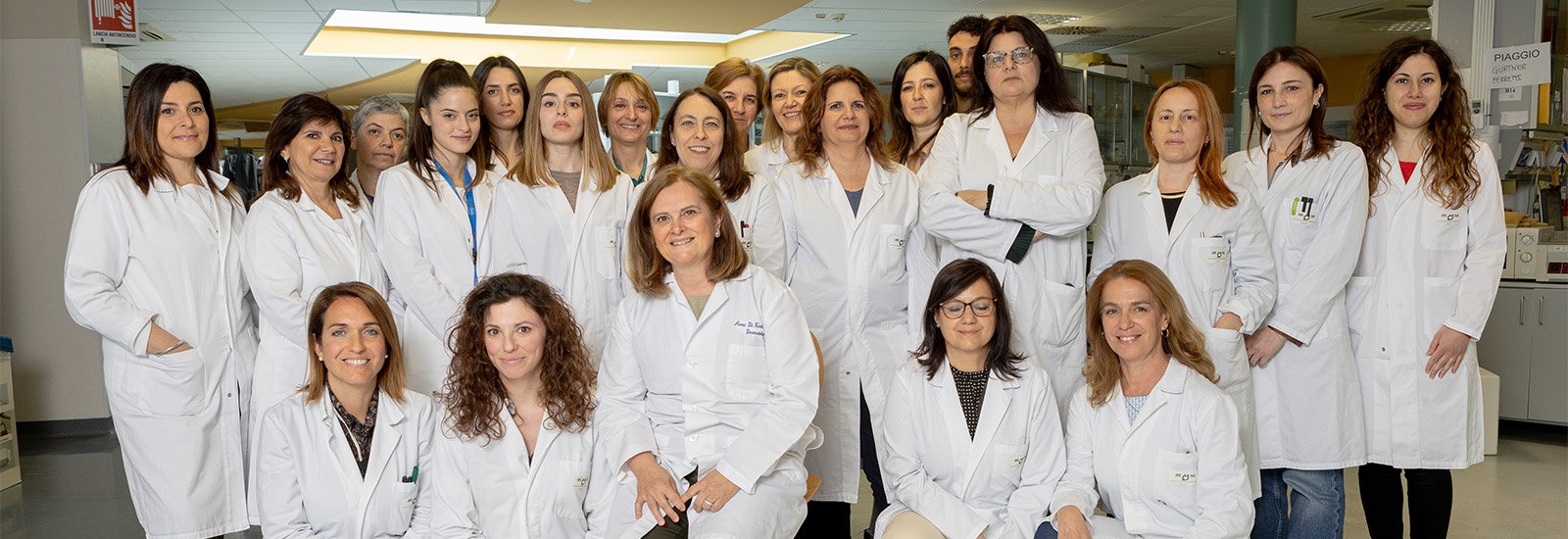
- Maria Lucia Dell'Anna
- Daniela Kovacs
- Silvia Caputo
- Gianni Petrone
- Antonella Vento
- Grazia Bottillo
- Stefania Briganti
- Emanuela Camera
- Miriam Maiellaro
- Monica Ottaviani
- Lorenzo Sciuto
- Barbara Bellei, PhD
- Emanuele Bastonini, PhD
- Giorgia Cardinali, PhD
- Alessia Cavallo
- Enrica Flori, PhD
- Vittoria Maresca, PhD
- Sarah Mosca, PhD
- Federica Papaccio, PhD
1. Mission
Our lab is dedicated to advancing knowledge in dermatology by focusing on fundamental basic science and clinical trial approaches. We aim to unravel the intricate mechanisms through which the skin defends the body against infections and environmental challenges.
Employing cutting-edge biochemistry, immunology, microbiology, and genetics techniques, our research delves into the complex interactions between the environment and mammalian cells. By modeling biological systems, we strive to decipher the underlying processes and translate our findings into improved diagnostics and therapeutics for human diseases.
Central to our mission is studying inflammatory cells, particularly lymphocytes and dendritic cells, and their pivotal role in cutaneous physiopathology. We are committed to unraveling the transcriptome and genome of skin cells under various conditions, including chronic inflammatory, autoimmune, hyperproliferative, dedifferentiation processes, and hereditary rare skin diseases.
Furthermore, we explore the biological value and functional properties of dermal, adipose tissue, and hair follicle stem reservoirs. We aim to develop novel therapeutic strategies for cellular and cellular-free regenerative medicine approaches.
In line with our comprehensive approach, we conduct both chemometric and quantitative metabolomics analyses to unravel the skin's metabolic intricacies. Additionally, we employ HPLC/MS/TOF technology to study the lipidomic skin profile in detail.
At the heart of our endeavors lies a profound interest in understanding the molecular mechanisms of epithelial defense. Notable discoveries include identifying mast cells as natural producers of antibiotic molecules known as Cathelicidins and uncountable studies on Vitiligo.
Through our interdisciplinary research efforts, we strive to develop innovative solutions in dermatology that will ultimately benefit human health and well-being.
2. Research activities
- Molecular Mechanisms of Epidermal Stem Cell Regulation: We are investigating the intricate molecular pathways governing epidermal stem cell self-renewal and differentiation and their implications in neoplasia progression. We employ advanced genetic manipulation techniques within primary cell and tissue contexts to dissect these mechanisms.
- Integration of Laboratory and Patient-Oriented Approaches: Utilizing epidermal model systems to bridge laboratory findings with clinical insights, elucidating the form and function of skin in both health and disease states. Enabling rapid and combinatorial genetic manipulations to explore the molecular underpinnings of skin disorders.
- Understanding Cancer development: We focus on unraveling the mechanisms driving cancer, a leading cause of patient mortality. We investigate strategies to overcome drug resistance through comprehensive studies to identify novel therapeutic targets.
- Regulation of Early Inflammatory Response in Cutaneous Injury and Infection: Investigating the mechanisms underlying the early inflammatory response to cutaneous injury and infection, specifically emphasizing cell recruitment. Identifying targets and pathways enhances host defense mechanisms and improves wound healing outcomes.
- Biological and Molecular Mechanisms in Cutaneous Diseases: Exploring the intricate biological and molecular mechanisms involved in inflammatory and hyper-proliferative cutaneous diseases, cellular skin cross-talk, and pigmentation. Developing novel therapeutic and preventive strategies through preclinical pharmacology studies.
- Omics Sciences Approach: Utilizing an omics sciences approach to characterize small molecules relevant to skin biology. Employing techniques such as cellular biology, biochemical analysis, immunohistochemistry, flow cytometry, and lipidomic analysis to dissect complex biological processes.
- Comprehensive Analysis in Pathophysiological Processes: Conducting in-depth analysis of pathophysiological processes using various branches of omics sciences. Activities include cellular and tissue culture, biochemical and functional parameter analysis, immunofluorescence, confocal microscopy, and bioinformatic analysis of data obtained.
- Identification of Sensitive Markers and Metabolic Pathways: Identifying sensitive markers and metabolic pathways altered by pharmacological treatments in dermatological diseases. Investigating the physiological and pathological implications of these alterations to advance understanding and treatment of systemic diseases with dermatological involvement.
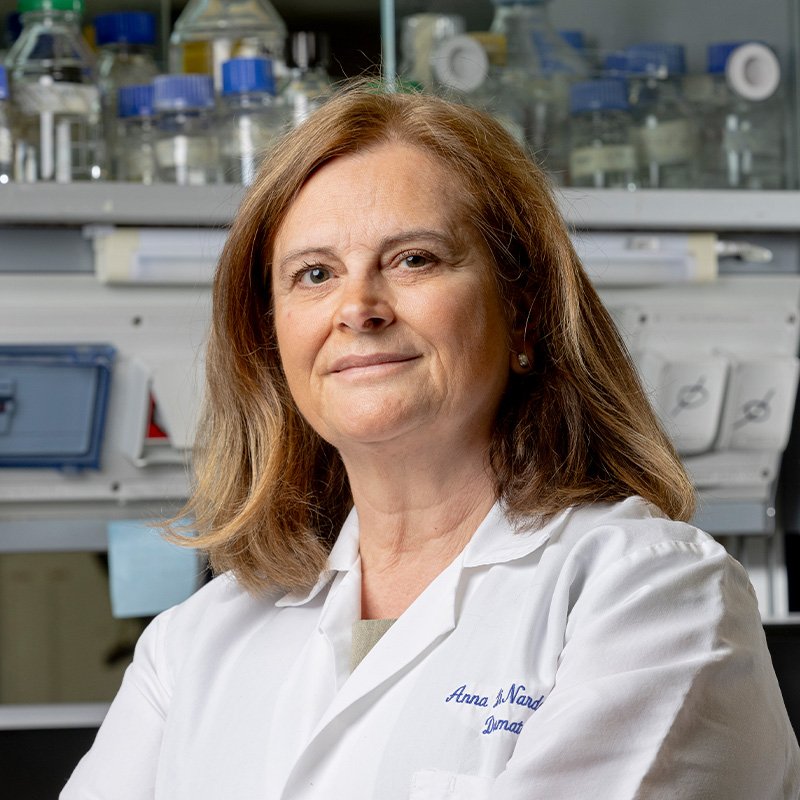
Director: Anna Di Nardo, MD, PhD
Dr. Anna Di Nardo, a distinguished physician-scientist with dual expertise in medicine and cell biology, has dedicated her career to unraveling the complexities of the skin's innate immune system and translating groundbreaking discoveries into tangible clinical applications. Her profound insights into mast cell biology have significantly advanced our understanding of skin immunology and paved the way for innovative therapeutic interventions.
- Key Contributions: Dr. Di Nardo's seminal work has shed light on the nuanced relationship between mast cells and microbial entities, both pathogens and commensals, underscoring their profound impact on mast cell phenotypes. With a steadfast commitment to advancing our understanding of skin inflammation, she is leading pioneering investigations into the intricate molecular mechanisms governing mast cell-mediated inflammatory pathways in conditions such as Rosacea.
- Innovative Approaches: Dr. Di Nardo's research extends beyond conventional boundaries, delving into the intricate crosstalk between Toll-like receptors (TLRs) and mast cells. Her laboratory is at the forefront of deciphering how microbial interactions with TLRs modulate mast cell production of interleukins and unraveling the intricate signaling cascades involving intracellular second messengers.
- Clinical Implications: Dr. Di Nardo's discoveries hold immense promise for clinical translation. By elucidating the fundamental mechanisms underlying skin inflammation and immune regulation, her research aims to pave the way for the development of novel therapeutic strategies targeting mast cell-mediated pathways. Ultimately, her work seeks to revolutionize the management of dermatological conditions and enhance patient care outcomes.