



Menu di pagina
- IRE Research and Technology
- IRE Competitive Grants
- PerfeTTO
- INNOVA
- Immune Metabolism Dysregulation and Efficacy of Anti-PD-1/PD-L1 Agents in Non-Small Cell Lung Cancer (NSCLC)
- Artificial Intelligence and Machine Learning Based Risk Prediction Model for Improving Endometrial Cancer Clinical Management
- Low-Intensity Extracorporeal Shockwave Therapy on Penile Rehabilitation after robot-assisted surgical treatment of genitourinary cancers
- Deciphering KEAPness for Improved Immunotherapy Prediction and Treatment
- MiRNA-based therapeutic approach to fight triple negative breast cancer
- Beyond the creation of a living biobank: dissecting the transcriptomic landscape of Gastro-entero-pancreatic neuroendocrine neoplasms
- Multidimensional assessment of virus-associated head and neck cancer patients for the discovery of predictive biomarkers to guide clinical intervention
- TArgeting drug resistant melanoma with miCroRNAs delivered by Lipid NanoparTICles (TACTIC)
- Addressing liver fibrosis prevention and treatment: an unbiased query on the hepatic microenvironment with a perspective targeting of the pro-fibrotic kinase HIPK2
- Analyses of HPV and host body fluid biomarkers as non-invasive strategy for detection of head and neck cancer relapse
- Deciphering Biology of R/R DLBCL Subtypes: miRNA Biomarkers for Optimizing Treatment and Survival
- Clinically approved drugs targeting pyruvate kinase M2: a drug repurposing pathway to move forward the treatment of glioblastoma
- Developing a Biobank Network Among Major Sarcoma Treatment Centers to Improve Biomedical Research
- Identification and Validation of Prognostic and Predictive Biomarkers, Including E3 Ubiquitin Ligases and MicroRNA Signature, for the Development of New Immunotherapeutic Approaches in Glioma
- Heal Italia
- D3 4 Health
- TRIglIFO2 project
- Poc MIMIT Project
- The PROMlSE project
- The 4Immunogenomics project
- Project ERBB2
- Project NANO-COVID-TEST
- Progetto DOMINO – Lazio Innova
- Project GEMMA – Lazio Innova
- Project COMETA
- Exploring the role of Bcl-2 family in the immune surveillance of melanoma: from mechanisms to therapeutic perspectives
- Exploring how endothelin-1/PIEZO axis intersects mechanical forces to fuel PARP inhibitor resistance in ovarian cancer
- The PROGRESS Project
- ULYSSES Project
- VerSiLiB Project
- PRODIGI Project
- LASERBLOOD Project
- BioCIPN Project
VerSiLiB Project

Official website of the project: https://versilib.eu/
Project description
Full title: “Versatile Amplification Method for Single-Molecule Detection in Liquid Biopsy”
Call: HORIZON-EIC-2021-PATHFINDEROPEN-01
N° Grant Agreement: 101046217
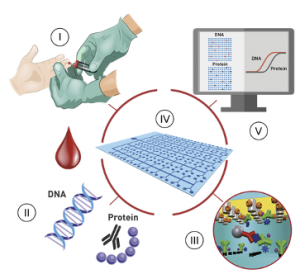
The project, coordinated by VTT Technical Research Centre of Finland, with IFO-IRE IRCCS as a Partner Beneficiary, is carried out by a Consortium formed by 7 partners between public and private institutions. It aims to develop a proof-of-concept of a novel in-vitro diagnostic system that combines the analysis of DNA and protein biomarkers into a single proteogenomic test. This project represents the first step in our journey to enable fast and easy-to-use proteogenomic tests for cancer management. By the end of the project, the developed technology will be validated in clinical settings for real world application.
Project start Date: 01/04/2022
Project end Date: 31/03/2026
Purpose
VerSiLiB aim is to build a proof-of-concept prototype featuring a novel read-out unit and opto-fluidic biosensor chip with nanophotonic signal enhancement. The benefits of the technology will be validated in the clinical melanoma management using liquid biopsy samples.
In oncology, liquid biopsy holds a promise to become a predictive tool to personalize follow-up and clinical decisions. We will demonstrate the relevance of the technology by detecting in circulating tumor DNA (ctDNA) an actionable mutation (BRAF p.V600E) alongside an highly melanoma-restricted protein (ChondroitinSulphate Proteoglycan 4; CSPG4). The BRAF mutation is a predictive biomarker related to therapy response, while circulating CSPG4 levels tend to increase with disease progression.
IFO-IRE leads WP6, focusing on the development of a 2D proteogenomic approach and the integration of VerSiLiB into a clinical context. It also provides biological samples, tests the digital sensing system in a clinical environment, and contributes to the Ethics plan of WP7. In addition, IFO-IRE participates in research activities within WP1 (cloning of antibody CDRs), WP2 (protocols for pre-analytical sample treatment and assay conditions), and WP5 (specifications for system integration).
Contacts
Principal Investigator IFO-IRE: Dr.ssa Elena Giordani, elena.giordani@ifo.it
Results
Within the VerSiLiB project, IFO-IRE played a key role in advancing liquid biopsy applications through the collection, biobanking, and analysis of clinical samples from melanoma patients. The clinical study was successfully completed, reaching full recruitment with 26 patients and 81 blood samples, providing a robust and well-characterized dataset for validation activities.
Preliminary findings demonstrate the feasibility of the VerSiLiB proteogenomic approach, enabling the combined detection of both genetic and protein biomarkers directly from plasma, supporting its multianalyte capability and clinical relevance.
Longitudinal analysis showed that BRAF p.V600E levels increase over time and correlate with disease progression, highlighting its role as a sensitive biomarker for monitoring and early detection of relapse. CSPG4 levels, although more variable, were associated with disease burden, providing complementary clinical information.
In parallel, experimental activities demonstrated that the VerSiLiB platform can detect very low concentrations of biomarkers using a novel enzyme-free digital amplification method (AMT). Tests performed in controlled conditions and in human plasma confirmed the sensitivity and robustness of the system, as well as its compatibility with real clinical samples.
Overall, these results support the potential of VerSiLiB as an innovative tool for non-invasive cancer diagnostics and patient monitoring, paving the way for fast, sensitive, and integrated tests for personalized oncology.
Financial Support
Funded by the European Union’s European Innovation Council under grant agreement No 101046217. (Views and opinions expressed are however those of the author(s) only and do not necessarily reflect those of the European Union or European Innovation Council. Neither the European Union nor the granting authority can be held responsible for them.)
The total grant of the project is 2.990.000 €
The GRANT assigned to IFO-IRE is 450.000,00 € (CUP IFO-IRE: H85F21000600001)