




UOSD IMMUNOLOGY AND IMMUNOTHERAPY
STAFF
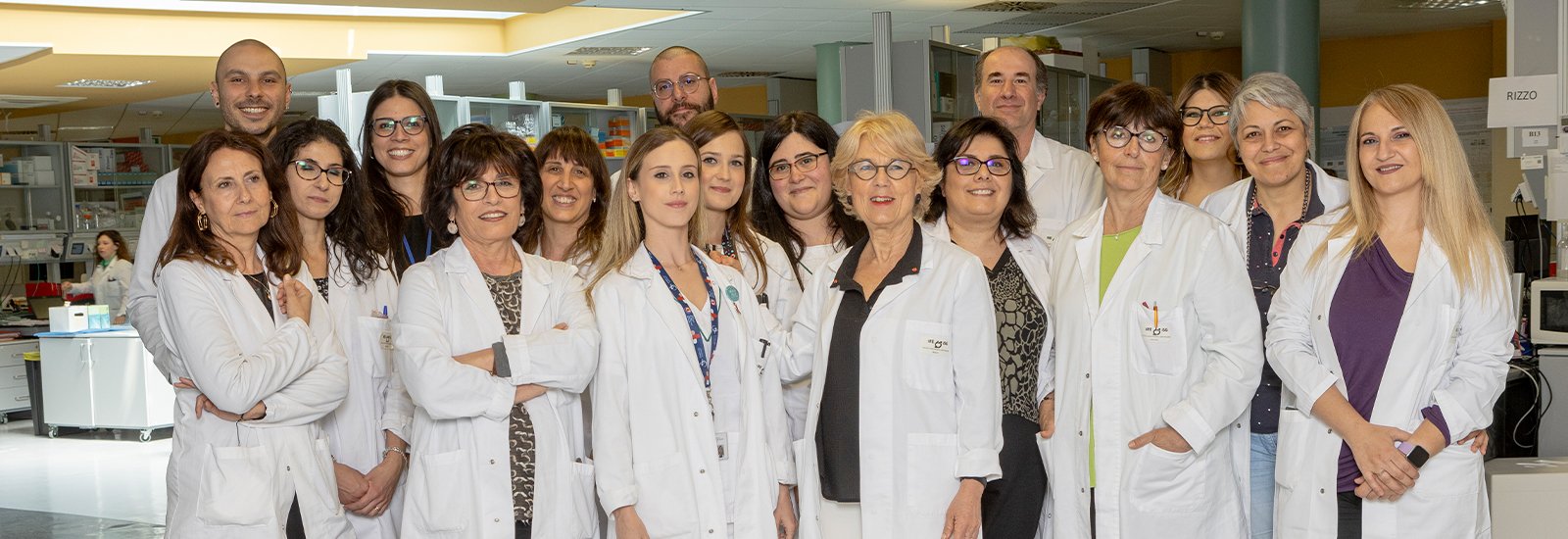
- Silvia Baldari
- Anna Di Carlo
- Francesca Di Modugno
- Giuseppe Frisullo
- Roberta Melchionna
- Alessandra Metelli
- Anna Maria Mileo
- Belinda Palermo
- Francesca Paolini
- Nicla Porciello
- Maria Manuela Rosado
- Sheila Spada
- Annalisa Tocci
- Gabriele Toietta
- Aldo Venuti
- Lorenzo D’Ambrosio
- Lorenzo Valenti
- Annalisa Antonini
- Vittoria Balzano
- Giulia Campo
- Miriam Petrella
- Maria Vincenza Sarcone
- Clelia Nisticò
1. Mission
Scientific Focus and Objectives
The Unit is dedicated to elucidating the mechanisms of anti-tumor immune responses in patients, with a specific emphasis on non–small cell lung cancer (NSCLC) and, more recently, on bladder cancer. Our research integrates cellular immunology, tumor biology, and translational oncology to understand the intricate interplay between tumor cells, the extracellular matrix (ECM), cancer-associated fibroblasts (CAFs), and immune cells within the tumor immune microenvironment (TIME).
Clinical and Translational Goals
Identify novel biomarkers and molecular signatures predictive of patient response to immune checkpoint therapy (ICT).
Define stratification criteria to optimize immunotherapy outcomes.
Provide the rationale for next-generation immunotherapeutic strategies, including CAR-T cell therapy tailored for solid tumors.
Mission
- To uncover potentially targetable pathways to overcome ICT resistance, the Unit:
- Develops and standardizes immune-monitoring methodologies, including single-cell approaches.
- Standardizes different spatial transcriptomic platforms to chart the TIME.
- Establishes patient-derived organotypic tumor models for preclinical immunotherapy testing.
- Identifies surrogate biological markers of clinical response, focusing on ICT treatment.
- Identifies new targets in the tumor microenvironment suitable for CAR-T development to apply in solid tumors.
- Collaborates with the HPV Unit on cancer prevention programs, notably male HPV vaccination, and develops new DNA vaccine formulations against HPV oncoproteins.
Close interaction with clinical departments ensures integrated research programs aimed at defining the immune landscape of patients treated with ICTs or radiotherapy and at designing combined radio-immunotherapeutic clinical trials.
2. Research activities
Role of hMENA Splicing in Tumor–Stroma–Immune Crosstalk
Our group investigates the molecular mechanisms by which hMENA splicing regulates communication between tumor cells, CAFs, and immune cells in NSCLC. We have recently defined a key role of hMENA in TGF-β–mediated crosstalk among CAFs, tumor cells, and T lymphocytes. Specifically, hMENA expression in CAFs modulates secretion of TGF-β isoforms, TGF-β receptor activation, and downstream signaling, thereby influencing epithelial–mesenchymal transition (EMT) in tumor cells and T-cell phenotype and functionality. To further explore hMENA’s contribution to the formation of an immunosuppressive microenvironment, we are assessing the functional impact of the CAF secretome on T-cell populations from patient peripheral blood and autologous tumor-infiltrating lymphocytes (TILs), with a focus on regulatory T cells (Tregs). In collaboration with bioinformatic and clinical teams, we are analyzing datasets of patients treated with PD-1/PD-L1 inhibitors to identify prognostic and predictive signatures associated with hMENA-expressing CAFs. To identify CAF subtypes with immunosuppressive activity, we are constructing a single-cell atlas of NSCLC CAFs, using computational inference to integrate our experimental findings. Additionally, to define immune signatures predictive of ICT response, we have characterized the frequency, phenotype, and functionality of T-cell subsets isolated from peripheral blood, non-tumoral adjacent tissue, and tumor sites of NSCLC patients, including those undergoing immunotherapy. An in-depth immune-monitoring study in cancer patients undergoing curative radiotherapy (RT) revealed significant modifications in immune cell composition and quality, underscoring novel targets for combined radio-immunotherapeutic clinical trials.
hMENA Isoforms and Immune Microenvironment Modulation
We identified hMENA isoforms as crucial mediators of cellular crosstalk in the TIME. In NSCLC cells, hMENA11a enhances LTβR expression, decreases fibronectin deposition, and promotes CXCL13 production by tissue-resident T cells. Conversely, in CAFs, hMENA/hMENAΔv6 isoforms increase fibronectin, inhibit LTβR–NF-κB signaling, and reduce CXCL13 secretion. Tumors characterized by high hMENA11a, low hMENA-positive CAFs, and reduced stromal fibronectin exhibit intratumoral tertiary lymphoid structures (TLS-IT) enriched in memory B cells and correlate with longer survival in N0 NSCLC patients. We also discovered that hMENA11a regulates Type I interferon (IFN) signaling. Loss of hMENA11a induces IFNβ via RIG-I, elevates PD-L1 levels, and promotes pro-tumor macrophage polarization. A derived macrophage gene signature correlates with poor survival in lung adenocarcinoma (LUAD). Notably, high hMENA11a/low IFN target gene expression identifies responders to ICT therapy, positioning hMENA splicing as a determinant of immune resistance.
CAF-Associated Targets for CAR-T Development
We identified C-type mannose receptor 2 (MRC2) as a key CAF subtype marker associated with T-cell exclusion. MRC2 is induced by TGF-β and upregulated in NSCLC CAFs relative to normal fibroblasts. MRC2 drives CAF activation, ECM remodeling, and upregulation of TGF-β, PD-L1, and PD-L2, thereby promoting an immunosuppressive microenvironment. MRC2’s high stromal expression identifies it as a candidate CAR-T target in solid tumors.
hMENA Isoforms in Nuclear Architecture
To investigate the role of hMENA isoforms in nuclear organization and immune gene regulation, we are analyzing nuclear morphology by confocal microscopy in NSCLC cells with hMENA gain and loss of function. The functional impact of these structural changes on gene expression will be evaluated through chromatin redistribution studies using epigenetic markers. In parallel, basedon our recent findings on hMENA’s role in CAF phenotype and function, we are extending these analyses to assess its contribution to nuclear morphology and chromatin organization in CAFs.
Autophagy and Tumor–Stroma Crosstalk
We investigated the interplay between autophagy and CAF-mediated tumor modulation in NSCLC. Silencing hMENA in a specific CAF subset markedly inhibits autophagic flux, suggesting a role for hMENA in autophagy-dependent secretory mechanisms and CAF–tumor communication. Current studies explore how autophagy affects epithelial–mesenchymal transition (EMT) and tumor invasiveness, with the goal of developing autophagy inhibitors to enhance immunotherapy efficacy.
HPV-Related Cancer Immunology
In collaboration with the HPV Unit, we coordinate male HPV vaccination programs and lead the multicenter V503-049 study on HPV vaccination for oral cancer prevention. Enrollment has been completed, and a three-year follow-up is ongoing. We launched a clinical trial on circulating HPV DNA in oropharyngeal cancer and are conducting an observational study assessing HPV16 E5 oncogene as a progression marker. Our group developed a specific assay for E5 detection and a micro-structured ELISA substrate for sensitive anti-HPV16 E7 antibody measurement. We also demonstrated a correlation between HPV infection and middle ear squamous cell carcinoma, with prognostic implications. We generated and validated intrabodies against HPV16 E6/E7 oncoproteins, which significantly reduced tumor growth in preclinical HPV-associated models.
Novel Immunotherapeutic Strategies Targeting the TME
We are developing CAR-T and BiTE immunotherapies targeting the immunosuppressive tumor microenvironment (TME). Through qRT-PCR, immunoblotting, and tissue microarray analyses, we validated multiple CAF-related targets, including EphA3, MRC2, LRRC15, and FAP. Two of these targets are currently under development for BiTE and CAR-T generation. Parallel ex vivo and in vivo studies in head and neck cancer models assess whether oncolytic virotherapy can reprogram the TME toward immunostimulation, thereby enhancing CAR-T efficacy.
Identification of Immune-Related Signatures of Response to Neoadjuvant Chemo- Immunotherapy in NSCLC
We are using an integrated multimodal approach, combining histopathology, spatial transcriptomics, single-cell RNA sequencing, and plasma proteomics, to characterize the tumor immune microenvironment (TIME) and systemic immunity in patients with resectable, early-stage NSCLC treated with neoadjuvant chemoimmunotherapy (neo-CT+IO). In a patient who achieved a complete and durable response, spatial transcriptomics and immunohistochemistry revealed abundant B cells and tertiary lymphoid structures (TLS) within the tumor regression bed, implicating B cells, the CXCL13–CXCR5 axis, and CXCL12⁺ CAFs in local humoral activation. Plasma proteomics further showed systemic immune activation, consistent with a coordinated local–systemic immune response associated with complete pathological response (pCR). These analyses are being extended to larger cohorts to validate tissue- and blood-based immune signatures predictive of pCR and to advance biomarker-driven patient stratification in precision immuno-oncology.
Tumor-Resident CD8⁺ T Cells in the Response to ICT in NSCLC
We have recently identified different CD8⁺ T cells associated with ICT response in NSCLC. Togain deeper insight into their contribution to ICT efficacy, we applied single-cell RNA sequencing to lymphocytes isolated from peripheral blood, tumor, and non-tumor tissues of seven NSCLC patients who underwent ICT therapy. We identified different CD8⁺ T-cell subsets, including a PD1⁺CD28⁺KLRG1⁺EOMES⁺ “pre-exhausted” population enriched in good responders and three distinct tissue-resident memory (TRM) CD8⁺ T-cell subsets differentially distributed among response groups. Co-culture, flow cytometry, and CellChat analyses highlighted B–T cell interactions sustaining anti-tumor immunity and likely contributing to shaping the response to ICT.
Coagulation–Cancer Crosstalk: Understanding the Basis for Novel Immunotherapeutic Strategies
We are investigating the role of the coagulation cascade in shaping the tumor microenvironment and contributing to resistance against immune checkpoint blockade. Using a combination of in vitro (cancer cell lines), ex vivo (precision-cut tissue slices generated from patient-derived tumor biopsies), and in vivo (genetically engineered murine models) systems, we aim to elucidate how the crosstalk between cancer cells and platelets modulates anti-tumor immunity. Our focus is on tissue factor (TF), a protein situated at the intersection of coagulation and tumor biology. TF is the primary initiator of the coagulation cascade and is notably overexpressed on the surface of many cancer cells, making it an attractive target for antibody-mediated immunotherapy. We have developed a humanized monoclonal antibody that targets TF without interfering with its physiological hemostatic function. This antibody serves as a modular platform for the development of TF-based therapies, including bispecific antibodies, T-cell engagers (BiTEs), chimeric antigen receptor (CAR) T cells, and antibody–drug conjugates. Our overarching goal is to integrate prior knowledge of cancer biomarkers and immunotherapeutic strategies to develop safe and effective TF-targeted cancer treatments.
TLS, Extracellular Vesicles, and Bladder Microbiota to Predict Prognosis and Therapy Response in Bladder Cancer Patients
In collaboration with the Departments of Urology and Medical Oncology 1, we are carrying out a project on the study of the TIME in bladder cancer. The aim is to define the presence, localization, and maturation status of TLS and to study the role of extracellular vesicles and bladder microbiota in generating different TIME that may influence tumor progression in BC patients. By employing biochemical, spatial transcriptomic, murine models, and organotypic tissue slice models, we aim to define signatures that may be applied in clinical practice.
Summary
Through an integrated multidisciplinary approach, combining molecular immunology, computational biology, and translational research, the Unit advances understanding of the tumor– stroma–immune interface. Our findings may contribute to the identification of predictive biomarkers, new immunotherapeutic targets, and innovative combined strategies to improve outcomes for patients with NSCLC.