



UOC TRANSLATIONAL ONCOLOGY RESEARCH
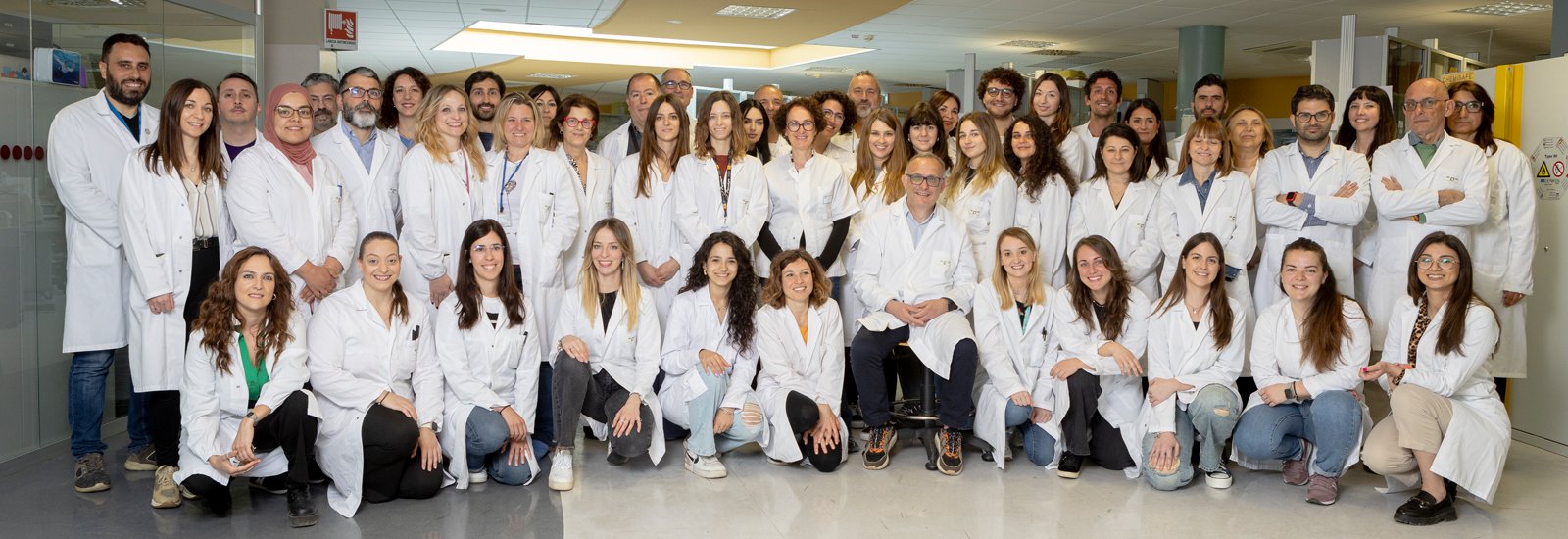
STAFF
1. Mission
Developing more precise diagnostic approaches to predict cancer progression and prognosis is central to precision medicine. The mission of the Translational Oncology Research Unit focuses on identifying specific genomic and epigenetic alterations in both solid and hematopoietic malignancies that can serve as novel biomarkers or actionable targets. This goal is pursued through genome-wide approaches applied to cell systems, animal models, patient-derived tissues, biological fluids (including ctDNA), non-coding RNAs, and patient-derived organoids, which provide advanced preclinical models to bridge molecular discoveries with therapeutic strategies.
2. Clinical activities
The Translational Oncology Research Unit plays an active role in supporting the clinical research activities of the Regina Elena National Cancer Institute. A central effort is dedicated to building comprehensive, molecularly and clinically annotated databases of specific tumor types, supported by the systematic collection and storage of DNA, RNA, and proteins from both patient tissues and biological fluids. In parallel, the Unit generates large-scale datasets from genome-wide analyses, including coding and non-coding RNA profiles, RNA sequencing, and DNA mutational studies of matched tumor lesions, thereby providing valuable resources for biomarker discovery and therapeutic stratification.
A distinctive aspect of the Unit’s activity is the establishment of early-passage cultures and patient-derived organoids from a wide range of tumors. These advanced preclinical models offer a powerfultool to explore cancer biology, perform functional studies, and test therapeutic strategies in real time, ultimately fostering the development of more precise and personalized treatment approaches.
3. Research activities
The research objectives of the Translational Oncology Research Unit are pursued through the integrated experimental work of the following groups:
Blandino’s group investigates the oncogenic role of mutant p53 proteins and the translational impact of non-coding RNAs as biomarkers for cancer stratification, recurrence, and treatment response, with a focus on head and neck cancers. The group also develops patient-derived organoids from multiple tumor types to model therapeutic vulnerabilities in real time and applies high-content drug screening on a library of 3,621 FDA-approved or Phase I–passed compounds to advance precision oncology.
Rizzo’s group is actively investigating the role of tissues and extracellular circulating miRNAs in hematopoietic malignancies and brain tumors as promising biomarkers for disease classification and outcome prediction. Additionally, the functional role of the identified miRNA signatures is being explored for their modulatory effects on drug response, tumor metabolism in lymphoma, and cancer progression in brain tumor studies. The impact of miRNAs on the crosstalk between the tumor and its microenvironment is also being investigated, with the ultimate goal of developing miRNA-based complementary therapies for these cancers. Preclinical experiments on murine models are ongoing to evaluate the effect of miRNA delivery for therapeutic purposes.
Biroccio’s group is actively investigating the extra-telomeric role of TRF2 in tumor formation and progression, with the aim of identifying novel therapeutic targets for antitumoral therapies in triple-negative breast cancer
The Segatto group has generated genetically defined mouse models of intrahepatic cholangiocarcinoma (iCCA) driven by FGFR2 fusion proteins (FFP). These models are dependent on FFP signaling and are therefore susceptible to pharmacological suppression by FGFR-specific tyrosine kinase inhibitors (F-TKI). We are currently investigating adaptive mechanisms through which FFP-driven iCCA cells may survive F-TKI treatment and evolve toward resistance.